Content Flywheel 90-Day Tracking: 12 Metric Patterns We Found (GA4 + Postiz Measured)
The content flywheel is a system that wires topic selection, production, distribution, and feedback into a closed loop. We tracked ~180 articles and ~700 social posts over 90 days and distilled 12 predictable metric patterns telling you which signal should trigger which action.
AIcycle started in early February 2026, publishing 2 SEO long-form articles per day with 4-5 social platforms in parallel. After 90 days, organic traffic moved from ~50 sessions/day to ~600 sessions/day, and the list grew from 0 to ~120 subscribers.
This isn’t a viral hit — it’s a trackable compounding curve. First 30 days lay the foundation, day 60 lift-off, day 90 enter traffic harvest.
If you’re not familiar with the basic content flywheel architecture, start with Content flywheel methodology. This article unpacks metrics directly: when you see the number, what do you change?
The toolchain is GA4, GSC, Postiz, Cloudflare Workers, Astro, R2, with Claude, Codex, and Gemini splitting the production work.
Google Search Central says content should answer real needs rather than just pile pages for search engines — see https://developers.google.com/search/docs/fundamentals/creating-helpful-content. Ahrefs SEO stats also remind us that organic traffic usually doesn’t happen on the day of publish — see https://ahrefs.com/blog/seo-statistics/.
1. 18-26 Days Until Stabilization
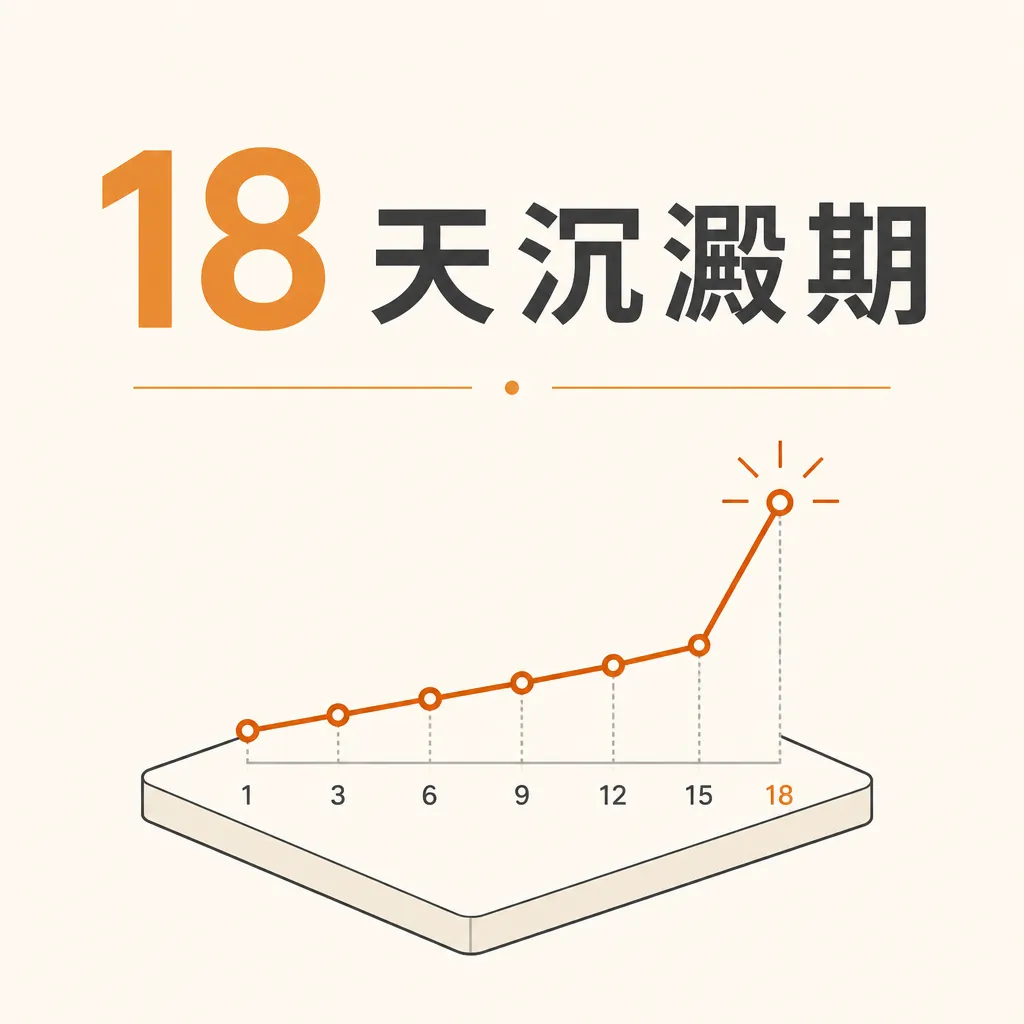
Pattern: an article takes 18-26 days.
Why this matters: many people change direction on day 7 when there’s no traffic — killing articles that haven’t been indexed or boosted by internal links yet. The content flywheel needs the sedimentation period.
90-day numbers: we saw the average article take 18-26 days from publish to the first wave of stable organic traffic. The first 30 days, site-wide organic traffic stays around ~50/day. After day 60, it gradually lifts.
Action trigger: at day 7, only check indexing and internal links — don’t rush to rewrite. If by day 21 there’s still no impression, then adjust the title, H2, summary section, and internal link entry points.
2. Pillars Lift 14-21 Days Earlier
Pattern: pillars lift before clusters.
Why this matters: the pillar carries topical authority, links out to multiple clusters, and is linked back from clusters. It’s not a single article — it’s the topic-group entry point.
90-day numbers: within the same topic group, pillar articles typically see stable impressions 14-21 days earlier than clusters. Clusters aren’t useless — they usually get pulled up together once the internal link network is established.
Action trigger: write the pillar first as a decision map, then use clusters for detail. Check weekly whether the pillar is linking to new articles, to avoid the main entry getting stale.
3. Internal Links ≥3 to Stabilize
Pattern: indexing eats internal link density.
Why this matters: indexing isn’t only via sitemap. Internal links help the search engine understand where the article sits, and let old articles carry new ones. Backlinko’s topic clusters research also notes that topic clusters help search engines understand content relationships — see https://backlinko.com/topic-clusters.
90-day numbers: our indexing success rate is ~92% within 7 days into Google index. But articles that are stably indexed usually have at least 3 internal links. Pillars average 7 internal links, clusters average 4.
Action trigger: before publishing a new article, add 3 entry points: 1 from the pillar, 1 from an adjacent cluster, 1 from a high-traffic old article. Without entry points, don’t rush to schedule the next article.
4. Put the Primary Keyword in the First 30 Characters
Pattern: the earlier the primary keyword, the more stable CTR.
Why this matters: GSC impression doesn’t equal click. If the front of the title doesn’t show the topic, searchers skip; mobile SERP truncates faster — the first 30 characters are your first ad.
90-day numbers: after putting the primary keyword in the first 30 characters of the title, average CTR went from ~3.1% to 5.4%. Pillar-type articles on clear queries can reach 6%-8%.
Action trigger: when GSC shows high impressions and CTR below 3%, fix the front half of the title first. Formula: primary keyword + scenario + result.
5. Threads Should Use a Single Hot Tag
Pattern: single hot tag has 1.7x higher engagement.
Why this matters: Threads cares about topic-of-the-moment heat. Multiple tags look broad but actually dilute context; a single hot tag is clearer.
90-day numbers: given you picked a hot topic tag, single-hashtag engagement is roughly 1.7x that of multi-tag. Social-to-article click-through: Threads ~1.2%, higher than FB ~0.6%.
Action trigger: pick only 1 main tag per day. If engagement is low within 2 hours, don’t add more tags — repost the article as a question, comparison, or list.
6. X Threads Should Break Into 7 Tweets
Pattern: 7-tweet threads see 2.3x higher impressions.
Why this matters: a single tweet works for opinion; a thread works for persuasion. If the article needs to first set up the problem, then give the framework, then drive traffic, splitting into 7 tweets holds attention better.
90-day numbers: X 7-tweet threads see ~2.3x higher impressions than single tweets, and it’s the social format driving the most site clicks we observe; X thread click-through ~2.0%.
Action trigger: split each long-form article into 7 tweets: pain point, numbers, counterintuitive insight, steps, case study, checklist, article link. Put the link in the last tweet or as a reply — don’t lead with it.
7. IG Cards: Don’t Rush to External Links
Pattern: pure cards drive higher comment rate.
Why this matters: IG isn’t friendly to external links — posts can’t link directly. Setting the goal as comments and saves makes more sense than pushing to bio link.
90-day numbers: IG pure-card comment conversion is higher than posts with bio link attached. It may not drive the most off-site traffic, but it tests topic language: which sentences make people stop, comment, save.
Action trigger: don’t push every IG post to traffic. Use cards to test headlines first, then port high-engagement copy into article titles, FAQs, or the next round of posts.
8. Two Articles a Day Beats One
Pattern: topic-group density drives SEO.
Why this matters: 1 article/day with scattered topics makes it hard for the search engine to judge site authority. 2/day isn’t about volume — it’s about creating density within a single topic group.
90-day numbers: in 90 days we accumulated ~180 articles. Organic traffic doesn’t grow linearly — when the same topic cluster reaches enough density, a batch of articles gets pulled up together.
Action trigger: don’t pick topics ad hoc daily. Use a pillar to define 8-12 clusters first, then publish concentrated on the same topic group for 2 weeks straight.

9. Weekly Cycle Beats Daily Decisions
Pattern: Friday scheduling produces more stable quality.
Why this matters: daily decisions burn the most brain and get pulled by short-term numbers. The weekly cycle locks down topic selection, production, scheduling, and review.
90-day numbers: after switching to Friday-to-Friday scheduling, the topic-group consistency of articles and social posts became more stable, with fewer missed publishes and duplicate topic picks. This aligns with the broken process points in 5 reasons AI adoption fails.
Action trigger: every Friday, review metrics, lock the topic group, schedule articles and Postiz, flag old articles needing internal-link fixes. Only fine-tune mid-week.
10. 7-Day Look-Back Saves 40% of Dead Articles
Pattern: looking back early beats rewriting late.
Why this matters: looking at an article only after 30 days misses the cheapest fix windows. The 7-day look-back isn’t about traffic success — it’s about indexing, impression signals, internal links.
90-day numbers: we estimate the 7-day look-back versus only looking back after 30 days reduces the “no impression, no entry points, no follow-up distribution” dead articles by ~40%.
Action trigger: on day 7, fixed check of 4 columns: indexed yet, has GSC impressions, has 3 internal links, has the second-round social scheduled. Anything missing, fix it now — don’t wait for the monthly report.
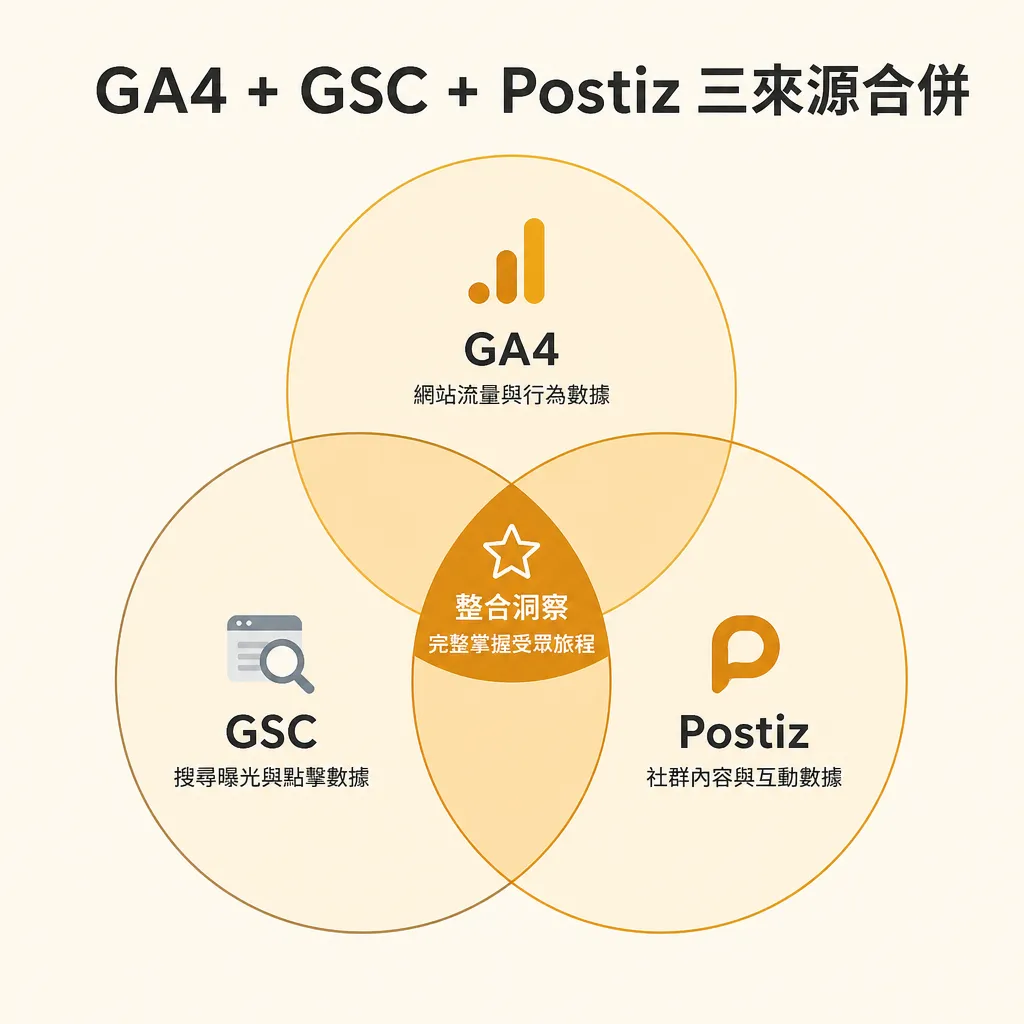
11. ROI Only Makes Sense With Three Sources Merged
Pattern: looking at one tool alone misleads.
Why this matters: GA4 tells you who landed, GSC tells you what searchers saw, Postiz tells you how posts distributed. Looked at separately, it’s easy to misjudge.
90-day numbers: some articles had average Postiz engagement that week but GSC impressions started climbing on day 18; others had high social clicks but low GA4 engagement — meaning the article didn’t catch them. ROI calculation: see Full AI customer service ROI formula. Workflow routing: see Multi-LLM routing in practice.
Action trigger: for every article, build a row in the dashboard: GSC impressions/CTR, GA4 sessions/engagement, Postiz clicks/comments.
12. Leads Lag Traffic by ~30 Days
Pattern: leads come ~30 days behind traffic.
Why this matters: organic traffic comes first; leads don’t immediately follow. Readers need to build trust through multiple articles before downloading templates or asking about services.
90-day numbers: AIcycle’s list went from 0 to ~120 subscribers, clearly lagging organic traffic by ~30 days. When sessions/day climbed from ~50 to ~600, the lead magnet started getting stably seen.
Action trigger: don’t write off the content flywheel in month 1 based on lead count. Before day 30, fix traffic and entry points. Days 31-60, add CTAs and templates. After day 61, look at lead conversion.
How to Roll Out in 90 Days
The 12 patterns boil down to 5 steps: define 1 pillar and 8-12 clusters; produce 2 same-topic-group articles daily; add 3 internal links before each publish; use Postiz to split to Threads, X, IG; review indexing, CTR, and distribution on days 7, 21, and 30.
Finally, merge GA4, GSC, and Postiz into one dashboard. You’re not looking for a single viral hit — you’re looking for which combinations of topic selection, title, and distribution repeat.
Want to bring this workflow into your content ops? Download the AIcycle “Content Flywheel 90-Day Dashboard Template.” We’ve workflow-ized the topic, publish, distribution, and feedback columns: Go to AIcycle services page.
FAQ
Q1: How long does the content flywheel take to show organic traffic?
Most articles shouldn’t be judged at day 7. We see the first wave of stable organic traffic usually takes 18-26 days, and the site-wide curve typically lifts noticeably only after day 60.
Q2: Will 2 articles a day hurt quality?
Yes, if you pick topics ad hoc daily. But with pillar-planned clusters and a weekly scheduling cycle, 2/day actually improves topic consistency and internal link density.
Q3: Which of GA4, GSC, Postiz is most important?
All three. GA4 for on-site behavior, GSC for search impressions and CTR, Postiz for social distribution. Looking at just one tool easily misjudges the article’s true value.
Q4: Do social posts always need to drive traffic to articles?
No. X threads fit driving traffic, Threads fits testing topic heat, IG cards fit testing comments and saves. Different platforms carry different jobs.